
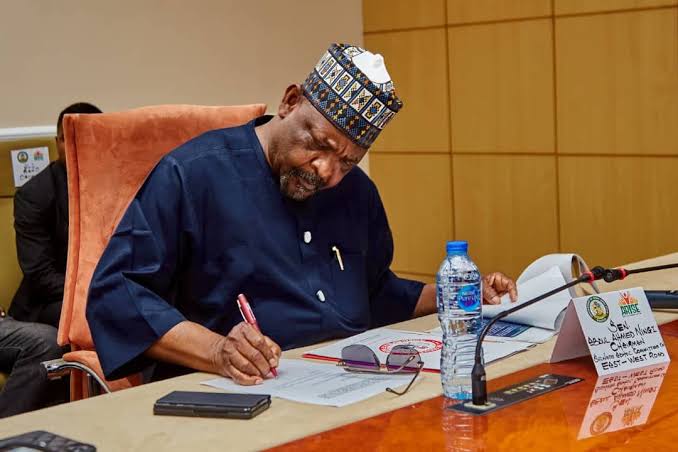


In a recent turn of events that has sent shockwaves through the Nigerian political landscape, Senator Abdul Ningi, a federal lawmaker from Bauchi State, has announced his resignation as the chairman of the Northern Senators Forum. This decision comes in the wake of his suspension from the Red Chamber over contentious allegations regarding the 2024 budget. Ningi’s suspension and subsequent resignation have stirred debates, raised questions about transparency in government, and underscored the complexities of political dynamics within the country.
The controversy surrounding Ningi began when he made startling claims regarding the 2024 budget, alleging that it had been padded with an additional N3.7 trillion. He argued that this substantial sum of money was not allocated to any specified projects, raising concerns about financial accountability and transparency within the National Assembly. The gravity of his allegations prompted swift action from the Senate, which moved to suspend Ningi for a period of three months pending further investigation.
However, the Senate’s response to Ningi’s claims only served to exacerbate tensions, as it maintained that there was no evidence to substantiate his allegations of budget padding. This disagreement between Ningi and his colleagues in the Senate underscored the deep-seated divisions and lack of consensus within the Nigerian political establishment, further eroding public trust in government institutions.
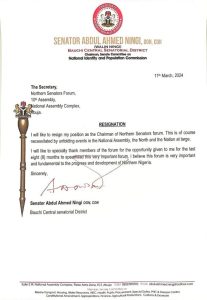
In the midst of this turmoil, Senator Abdul Ningi took the unprecedented step of resigning from his position as the chairman of the Northern Senators Forum. In his resignation letter, he cited the “unfolding events in the National Assembly, the North, and the Nation at large” as the primary reasons for his decision. While expressing gratitude to his colleagues for the opportunity to lead the forum for the past eight months, Ningi emphasized the importance of the Northern Senators Forum in advancing the progress and development of Northern Nigeria.
The repercussions of Ningi’s resignation extend beyond the confines of the Northern Senators Forum, reverberating throughout the political landscape of Nigeria. His departure has left a leadership vacuum within the forum and raised questions about the future direction of Northern representation in the Senate. Moreover, it has reignited debates about the need for greater accountability, transparency, and integrity in governance, particularly within the National Assembly.
Furthermore, Ningi’s resignation has exposed underlying tensions and power struggles within the Nigerian political elite, highlighting the fragility of political alliances and the challenges of navigating the intricate web of interests and ambitions. As political actors jockey for influence and control, the fallout from Ningi’s resignation serves as a cautionary tale about the perils of dissent and the consequences of challenging the status quo.
At its core, the saga of Senator Abdul Ningi’s resignation underscores the urgent need for reform and renewal within Nigeria’s political system. It serves as a wake-up call for leaders to prioritize the public good over personal interests, uphold the principles of accountability and transparency, and work towards building a more inclusive and equitable society. Only through genuine commitment to democratic ideals and the rule of law can Nigeria overcome its current challenges and realize its full potential as a prosperous and thriving nation.
The resignation of Senator Abdul Ningi as the chairman of the Northern Senators Forum marks a significant moment in Nigeria’s political history. It reflects the tensions, divisions, and complexities inherent in the country’s political landscape, while also highlighting the pressing need for reform and renewal. As Nigeria navigates the uncertain terrain of its democratic journey, the lessons learned from this episode must serve as a catalyst for positive change and a renewed commitment to the ideals of democracy, transparency, and accountability.